
Understanding Past Perfect Tense
The Past Perfect Tense is used to show that an action was completed before another action in the past. It is often used to clarify the order of events.
Formation of Past Perfect Tense
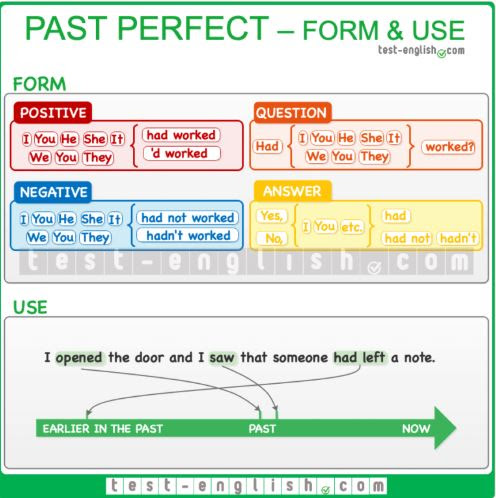
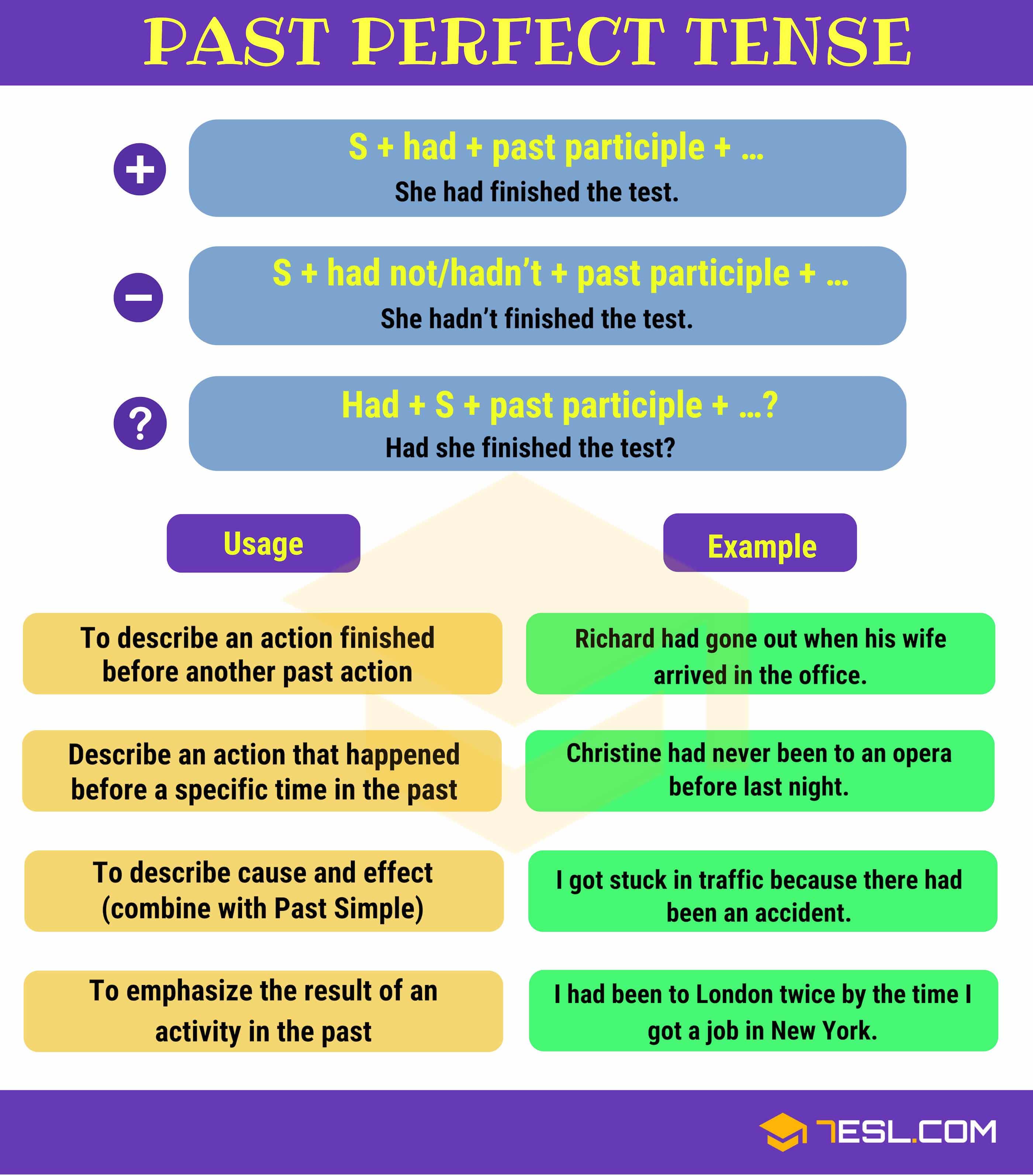
To form the Past Perfect Tense, combine the auxiliary verb “had” with the past participle of the main verb. The structure follows this pattern:
Subject + had + past participle
For example:
- I had eaten
- They had gone
Negative sentences use “had not” or “hadn’t”:
- She had not finished
- We hadn’t seen
Questions invert the subject and “had”:
- Had you left?
- Had they arrived?
The past perfect is the same for all the persons.
- I/you/he/she/it/we/they had left when I arrived.
We can contract had to ‘d.
- I called him, but he’d gone to a meeting.
Examples of Past Perfect Tense
Examples make the use of Past Perfect Tense clear.
- By the time she arrived, I had already left.
- He had finished his homework before the movie started.
- They had lived in Paris before moving to London.
Tabs for better clarity:
| Sentence | Explanation |
|---|---|
| By the time she arrived, I had left. | Action 1: I left. Action 2: She arrived. Action 1 happened earlier. |
| He had finished before it started. | Action 1: He finished. Action 2: It started. Action 1 happened earlier. |
Past Perfect Tense helps make the sequence of past actions clear.
Usage of Past Perfect Tense
The past perfect tense is useful for indicating that one action was completed before another action in the past. It can show cause and effect as well as sequential events clearly.
- Indicating Completed Actions
The past perfect tense is used to show that an action was finished before another past action started.
For example, “She had finished her homework before she went out to play.” The first action (finishing homework) was completed before the second action (going out to play).
This tense helps to create a clear timeline of events.
- Showing Cause and Effect
This tense can also illustrate cause and effect.
For instance, “They were hungry because they had not eaten all day.” Here, the reason for being hungry (cause) is clear because of the past perfect tense used for the action of not eating (effect).
It makes relationships between actions easy to understand.
- Describing Sequential Actions
The past perfect tense is effective in describing actions that happen one after another.
For example, “After he had saved some money, he bought a new bike.” The saving happened first, then the bike purchase followed.
This use helps to set up a sequence of events so the reader knows what happened and in what order.


Past perfect or past simple?
We use the past simple to describe a series of past events in chronological order, and we use the past perfect to make clear that one of the events happened before. Compare these two sentences:
- When I arrived, she left. (=She left after I arrived.)
- When I arrived, she had left. (She left before I arrived.)


Be careful with this common mistake!
The contraction ‘d can be had or would. Remember that we use an infinitive form after would and a past participle after had.
- I‘d love to go to your party. (= would)
- I noticed that he‘d eaten my cake. (= had)


