Thursday, 24 June 2021
Modal Verbs IV
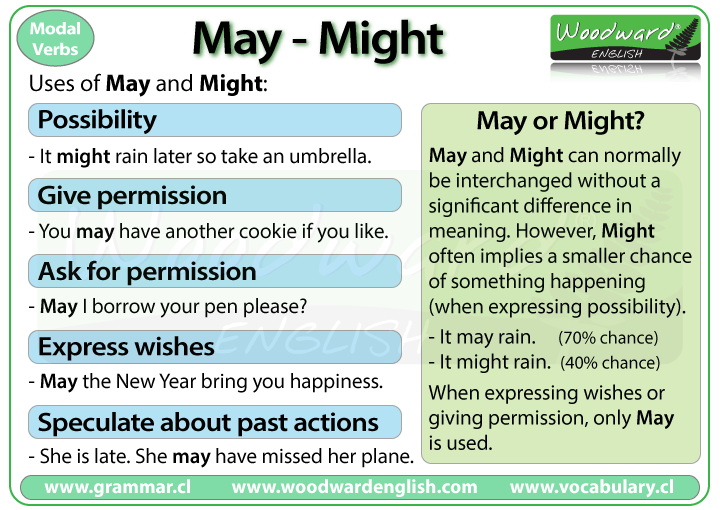
Some modal verbs (must, cannot, may, might, could) can have more than one use.
When we want to talk about the degree of possibility of something, we use them. Depending on how sure we are about the fact, we will use one modal verb or another. Besides, depending on whether our prediction was in the past or in the present, we will change the verb tense.

Here is a quick guide on how to use them:
- Modal verbs in present tense: Modal verb + inf
- Modal verbs in past tense: Modal verb + have + past participle
Must
- Present: we believe that something is true.
You have been studying the whole morning. You must be tired.
- Past tense: we believe that something is true.
He studied a lot for his exams. He must have been happy after he finished them.
Cannot (can’t)
- Present: We are certain that something is NOT possible.
I saw him on the city center ten minutes ago so he cannot be home yet.
- Past: We are certain that something is NOT possible.
You cannot have seen him in the office, he is on a trip.
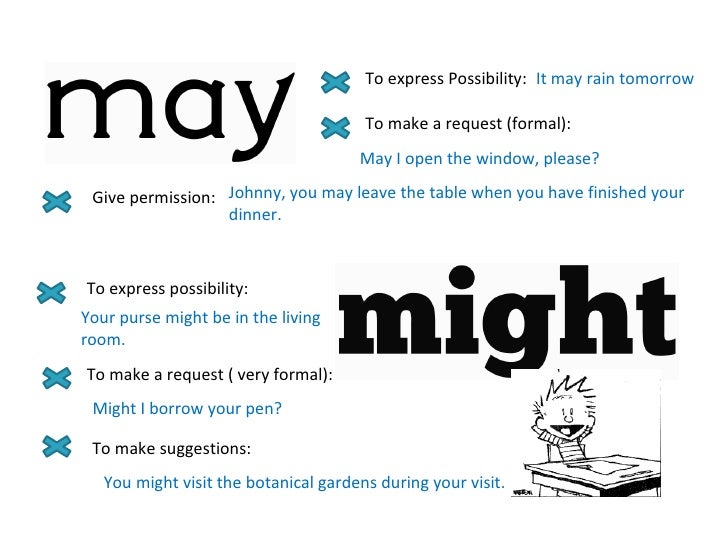
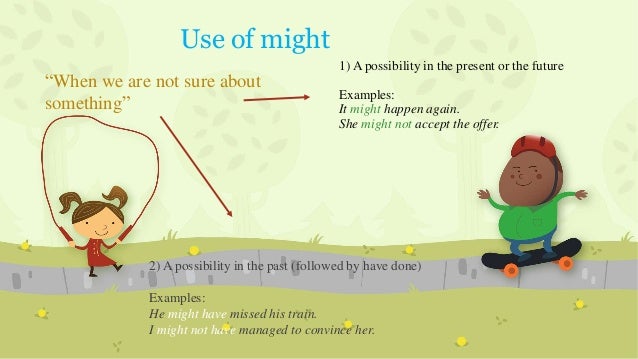
May / Might / Could
- Present: You think that something is possible.
I might go to the cinema, I don’t know yet.
- Past: you think that something is possible.
He might have forgotten to call you. (He did not call, so there is a possibility that he forgot).
Wednesday, 23 June 2021
MODAL VERBS III
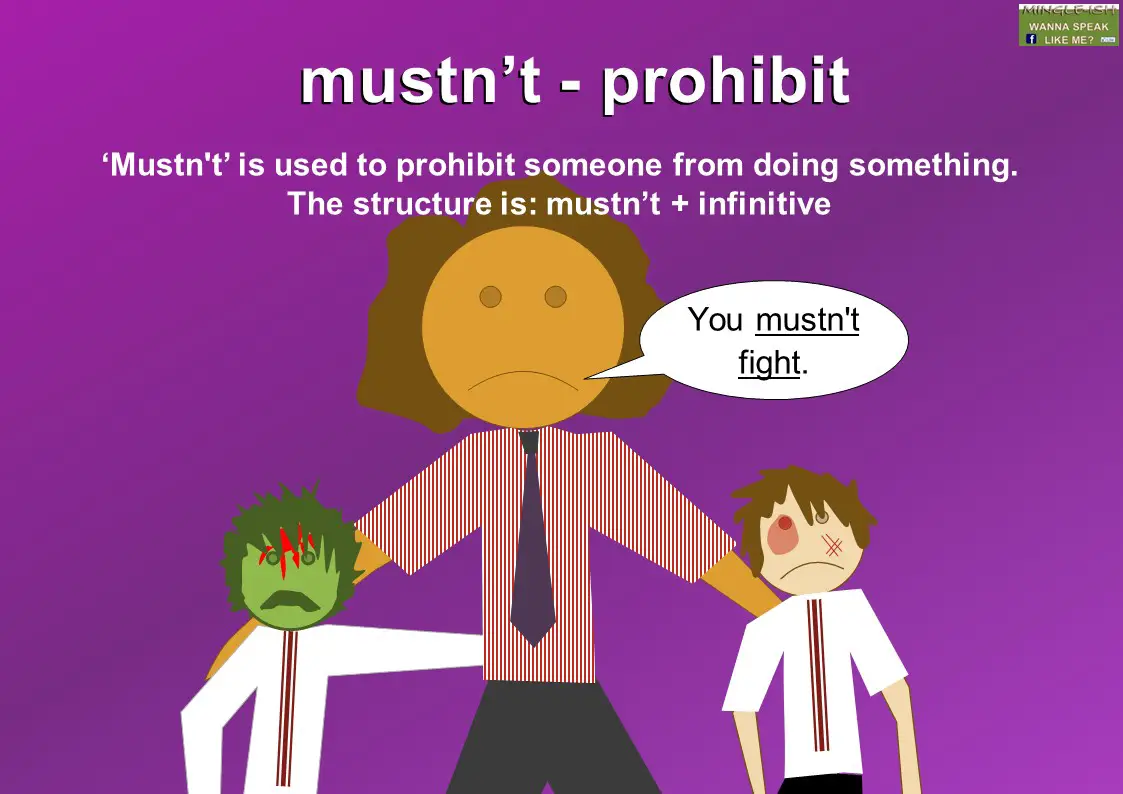
Expressing obligation in English is a communicative need. For that, we use imperatives and modal verbs: MUST/ MUSTN'T and pseduo-modal structures: HAVE TO, NEED TO. However, we have to pay special attention to the differences in meaning existing among them.
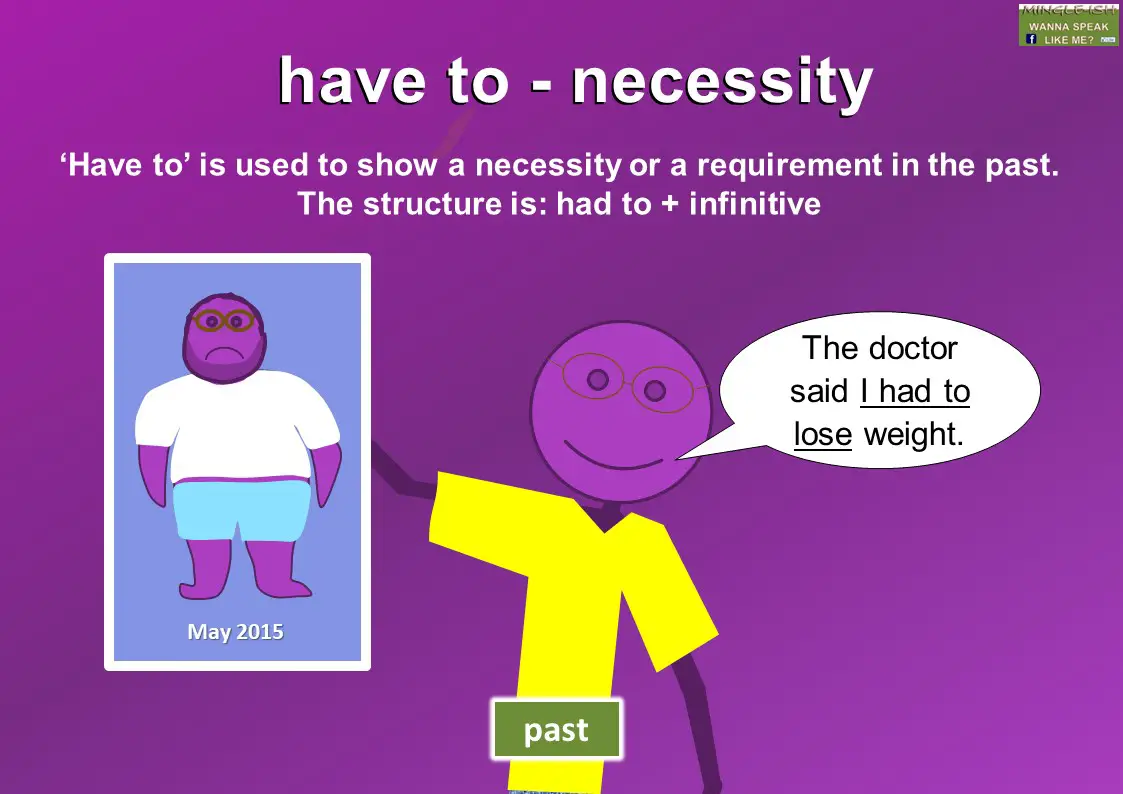
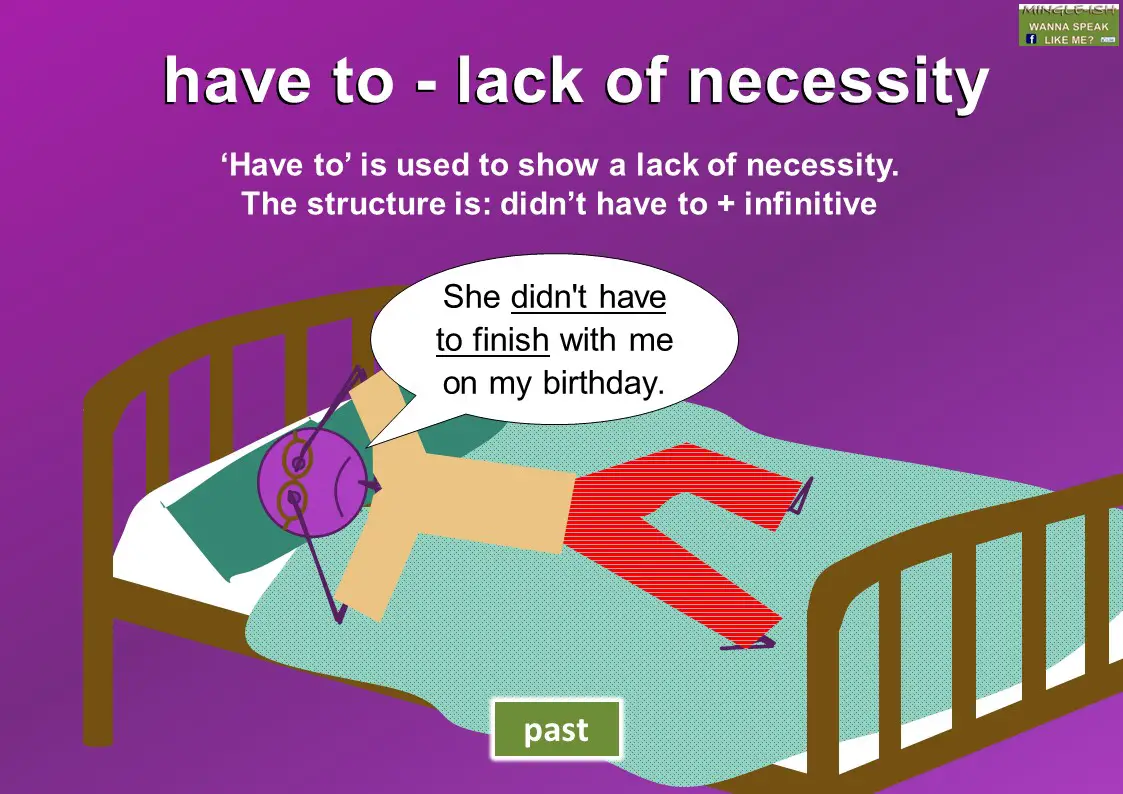
MODAL VERB – HAVE TO
Here are the ways in which we use ‘have to’ as a modal.
Take a look at the pictures below, you’ll find the function of ‘have to’ as a modal and examples in everyday use.
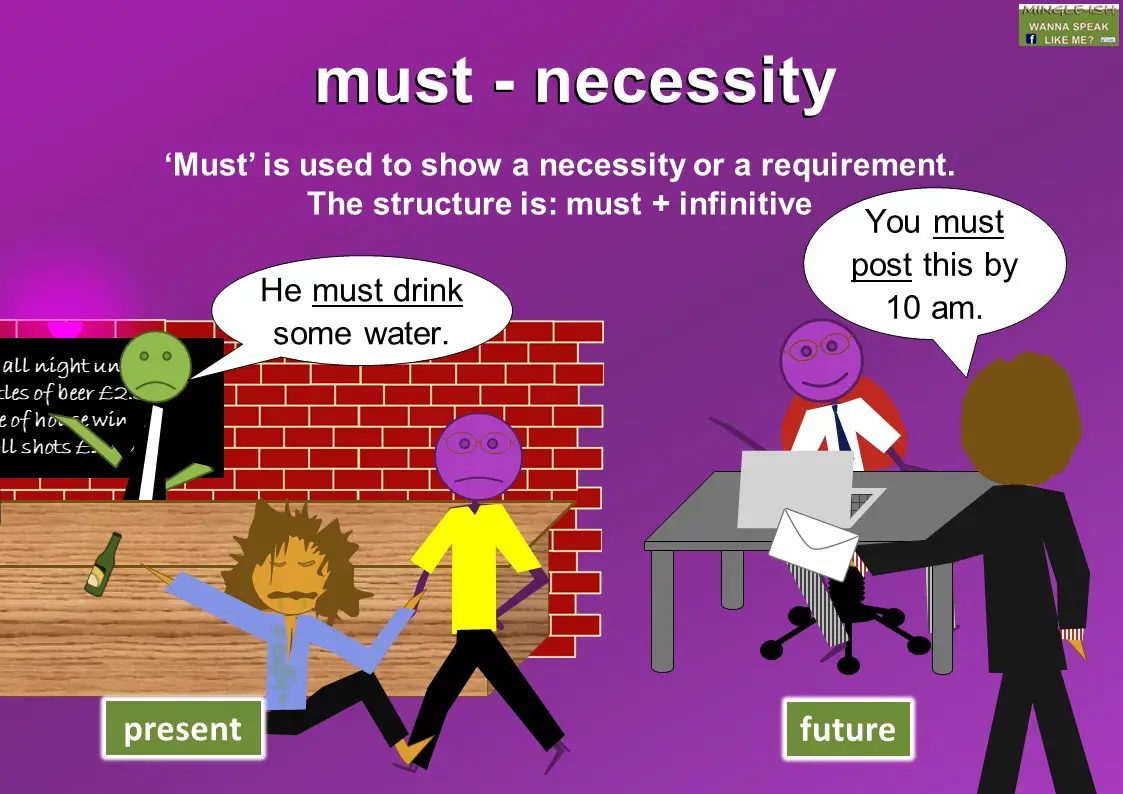
MODAL VERB – MUST
You mustn’t procrastinate, you must learn the uses of ‘must’ today without delay.
Here are the ways in which we use ‘must’ as a modal.
Take a look at the pictures below, you’ll find the function of ‘must’ as a modal and examples in everyday use.

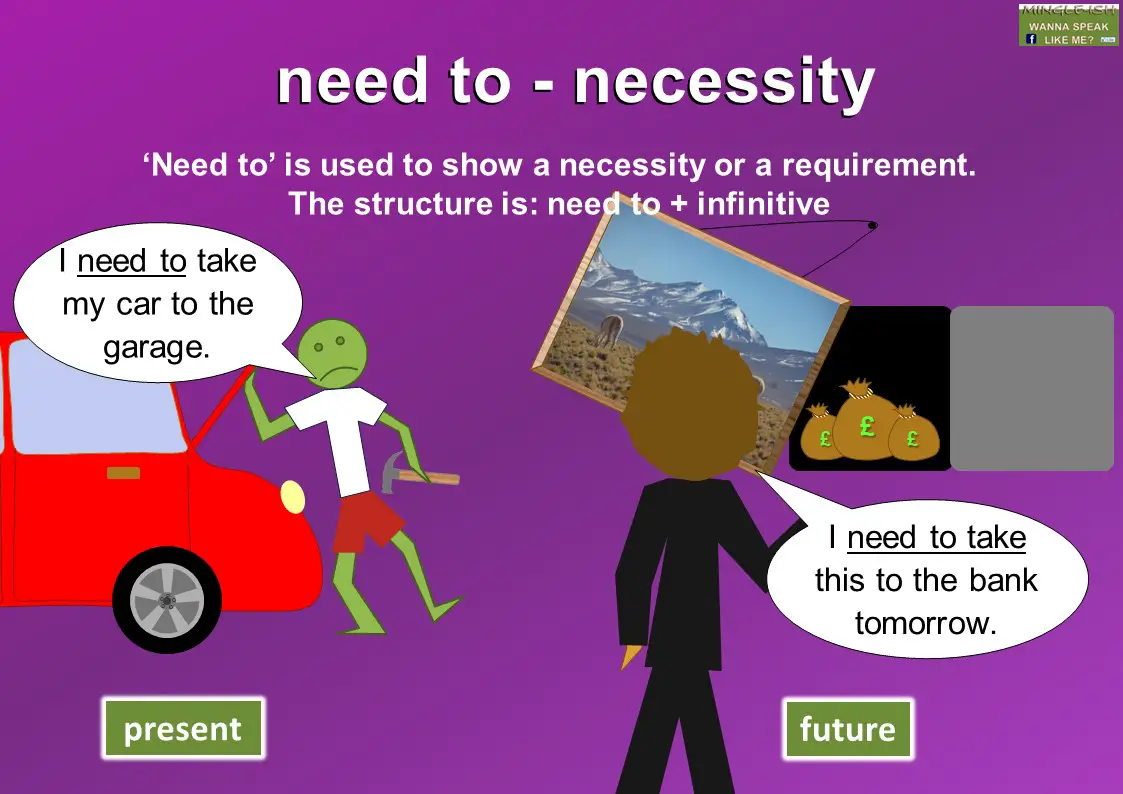
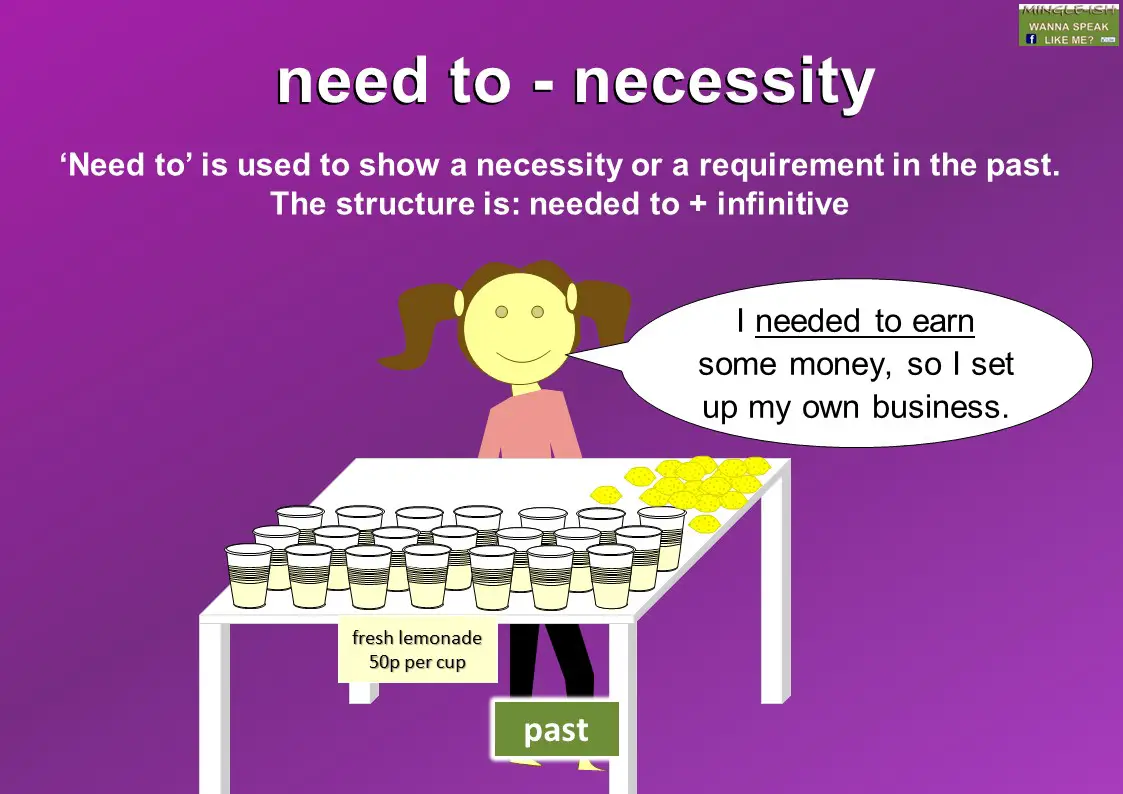
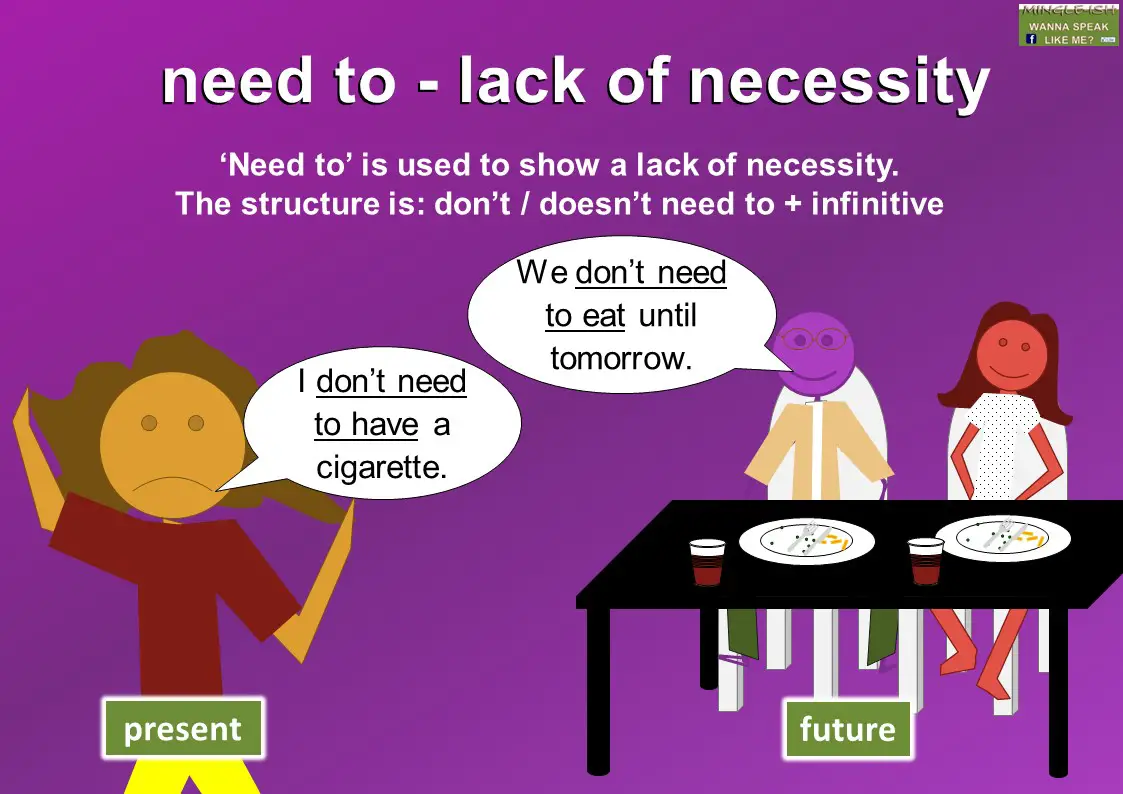
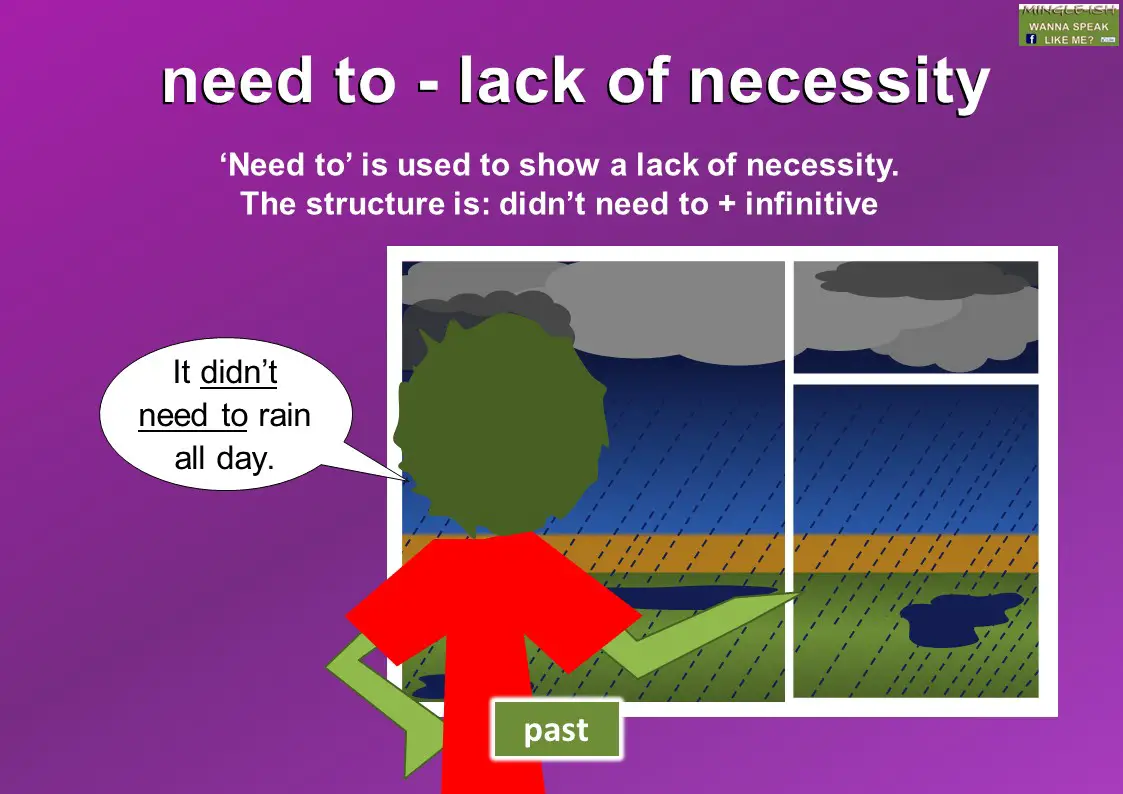
MODAL VERB – NEED TO
Here is another modal you need to learn today. Check out the ways in which we use ‘need to’ as a modal.
– necessity (a requirement)
Take a look at the pictures below, you’ll find the function of ‘need to’ as a modal and examples in everyday use.
Don't forget to double check the differences between: MUST, HAVE TO, NEED TO AND SHOULD:
MODAL VERB QUIZ – HAVE TO, MUST, NEED TO
Now you must test yourself with this quiz. You need to know about modals to become a pro.
Answers: 1. have to/must/need to 2. needn’t/don’t have to 3. must 4. have to/must/need to 5. have to/must/need to 6. mustn’t 7. need to 8. didn’t have to
ACTIVITIES:
- LIVEWORKSHEET. CLICK HERE
- Attention, there are several options correct in some activities. Activity number 2 is a multiple choice one.
- BASIC. Have to, must, should. Click here
- HAVE TO, DON'T HAVE TO, MUST, MUSTN'T. Click here
- HAVE TO, DON'T HAVE TO. Click here
- BBC ENglish in a minute. Quizz. Click here
- British Council. Video, worksheets. Click here
Tuesday, 22 June 2021
MODAL VERBS II
CAN, COULD and BE ABLE TO are used to express a range of meanings related to mood and modality in English: ability, permission, possiblity...
CAN, COULD are MODAL VERBS, whereas BE ABLE TO is a pseudo modal structure which concords with the subject of the sentence by means of the verb TO BE. BE ABLE TO is always followed by infinitive.
Let's see how it works and practice!!
- to talk about the future, you can only use BE ABLE TO.
- can /could + infinitive
- be able to concords with the subject and it is not a modal verb
- CAN, COULD, BE ABLE TO. liveworksheet. CLICK HERE
- CAN, COULD, WILL BE ABLE TO. LIVEWORKSHEET. click here
Monday, 21 June 2021
Modal verbs I
What do you know about modal verbs?
A lot! You only have to pay attention to the following pics and practice to learn more about them.
This post explains the basics of modal verbs together with CAN/CAN'T COULD/COULDN'T , MUST and SHOULD.
Do the quizz after reading the presentation!!